

Whether you’re an athlete or prefer to stay on the couch, these will improve your quality of life.
(Photo: Brad Kaminski; Model: Jenna Edwards)
Published on October 14, 2025 11:02 am
One of the things that quickly became apparent when I started working as an athletic trainer and yoga teacher is that most athletes place a disproportionate emphasis on “opening the hips” by doing stretches for the hip flexors. But what almost everyone overlooks is practicing the equally crucial hip flexor strengthening exercises for these overworked muscles.
Research suggests that practicing hip flexor strengthening exercises could do this reduces the risk of injury and improving athletic performancer runners. It could also reduce the progression of mobility decline among people aging population. Conversely, weak hip flexors can hinder the ability to navigate daily activities with ease.
Yet we are too focused on stretching the hip flexors, resulting in an imbalance in our body that occurs every time we take a step.
What are the hip flexors?
Strong hip flexors are essential for running, walking, cycling and stair climbing, among other forms of exercise and activities of daily life. The hip flexors consist of a group of muscles located at the top of the leg, at the front of the hip and pelvis. As the name implies, the hip flexors help the leg bend at the hip, which is the motion that brings your leg toward your chest, such as when you walk up a flight of stairs or take a step forward while walking or running.
The primary hip flexor muscles are the psoas major and the iliacus (together called the iliopsoas). Muscles that help include the rectus femoris (one of the muscles in the quads), the sartorius, and the pectineus.
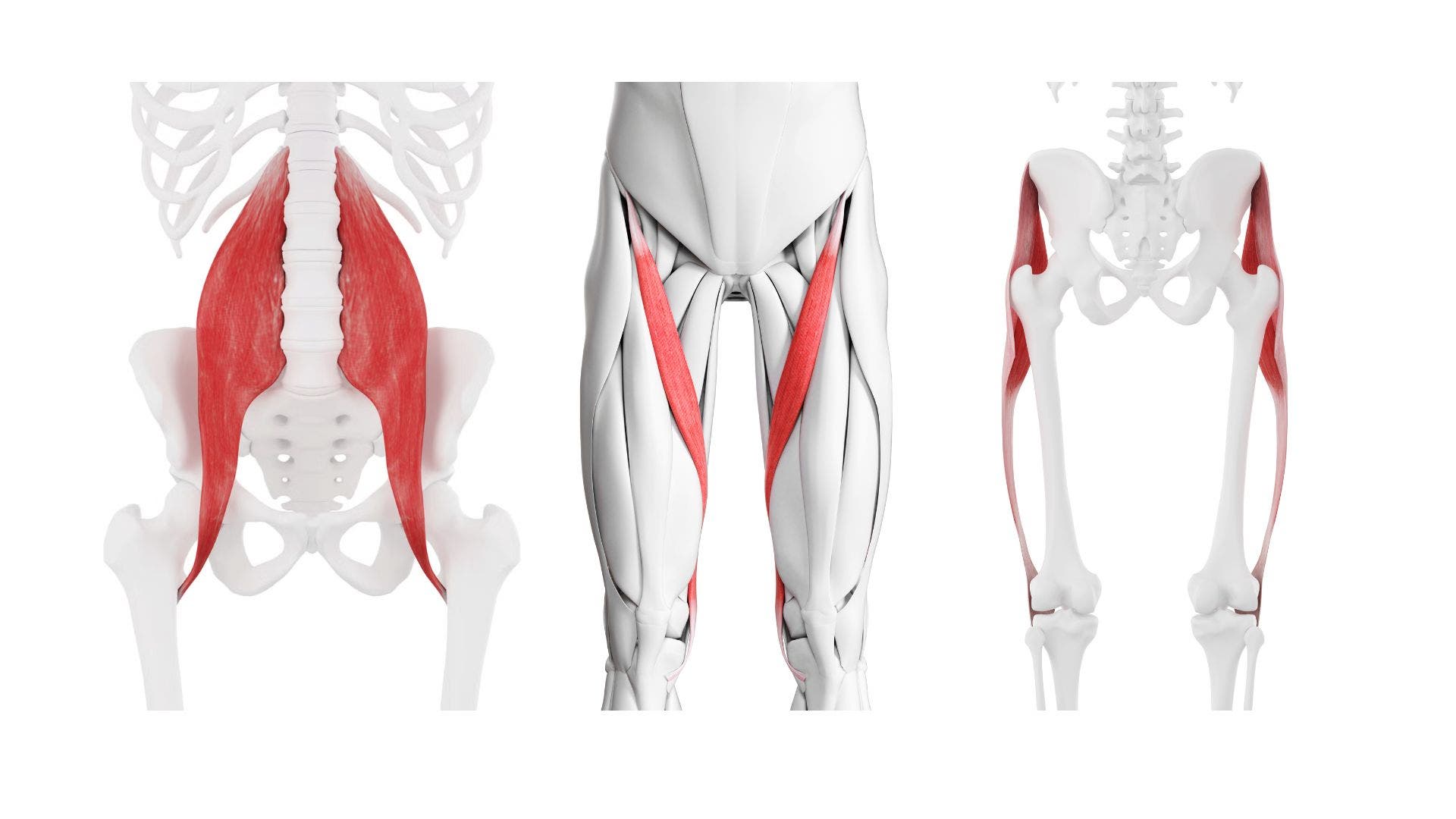
Why You Need Hip Flexor Strengthening Exercises
When the hip flexors are weak, your body must compensate by overloading other supporting muscles. Additionally, weak hip flexors can lead to hip flexor strain alignment problems in the hips and knees, and change the way your body needs to move. These altered mechanisms can cause muscle and joint pain, tension and pain. For example, weak hip flexors It has been shown to contribute to back, hip and knee pain and reduced walking efficiency. They can also increase your risk of certain injuries and compromise your performance in running and almost anything else.
Take a runner as an example training for her first half marathon. She had intermittent pain in her knee and IT band (along the outer hip and knee). A movement analysis revealed that the hip flexor muscle was out of balance as she appeared to be turning her foot outwards. This was caused by hip flexors being too weak to lift her leg straight up. Instead, she had to use the support of other muscles along the sides of her glutes and around the ankles to flex those joints outward to “shorten” the leg enough to keep her foot from scraping the ground as she ran. As a result, she overworked very small muscle groups that normally only stabilize the joints.
The good news is that hip flexor exercises can help you bypass pain and injuries. Below are some of the most effective hip flexor exercises, whether you are an experienced athlete or someone who sits all day.
5 Best Hip Flexor Strengthening Exercises
Most of these require no equipment. If you are new to hip flexor strengthening, are experiencing hip flexor weakness, or are rehabbing a hip flexor injury, start with these hip flexor exercises that use only body weight.
For most hip flexor strengthening exercises, I recommend starting with two sets of exercises that are within your range. If you want to increase your muscular endurance, you can add a third set as your hip flexor strength improves. Build up to 3 sets of 15-20 reps. If you want to increase hip flexor strength to maximize performance with more explosive activities like running, consider adding more resistance and sticking to two sets of 8 to 12 reps
As you get stronger, you can add resistance in the form of ankle weights or resistance bands. Here are some of the simplest and most effective hip flexor exercises.
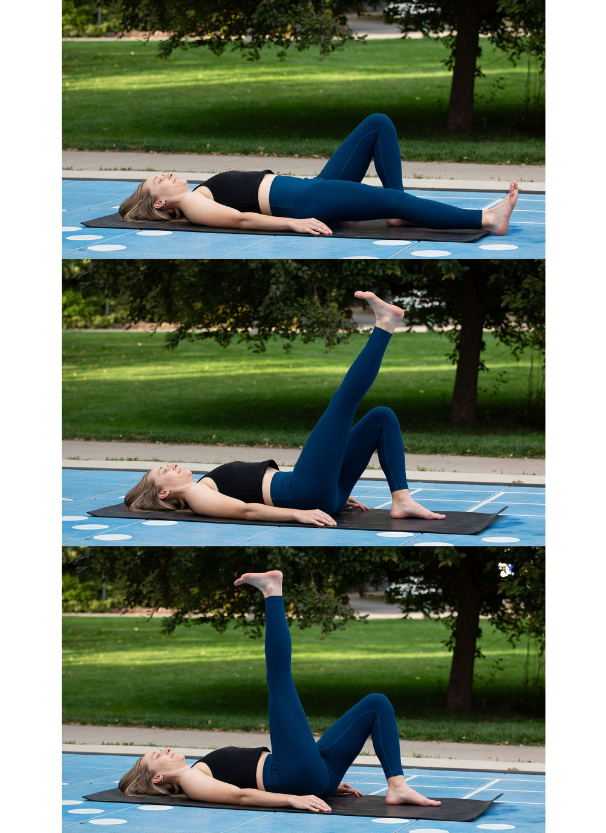
1. Straight leg raises
Straight leg raises are one of the best hip flexor strengthening exercises for beginners. They are exceptionally easy to practice and all you need is your body. You essentially lie on your back and lift one leg straight toward the ceiling. The movement isolates the hip flexors. As you get stronger, you can use an ankle weight for extra resistance.
1. Lie on your back with your hands on the mat next to you. Bend one knee and place that foot flat on the mat, keeping your other leg straight.
2. The extended leg is the leg you are going to move. Keep your leg straight and your toes pointed toward the ceiling as you inhale and slowly lift the leg up. You need to engage your core muscles to keep your lower back flat on the ground.
3. Lift your leg as far as you can without bending your knee. If you experience tightness in your hamstrings, it will limit how much you can lift your leg.
4. Exhale as you slowly lower your leg back down, but make sure the back of your heel doesn’t actually touch the floor. Just before this happens, contract your hip flexors as you inhale and raise your leg again to begin the next rep.
5. Build up to 15 to 20 reps, then switch legs.
2. Angled leg raises
This adjustment externally rotates the hip, which helps isolate the iliopsoas muscle.
1. Perform the same straight leg movements, but with the toes of your extended leg turned outward about 45 degrees.
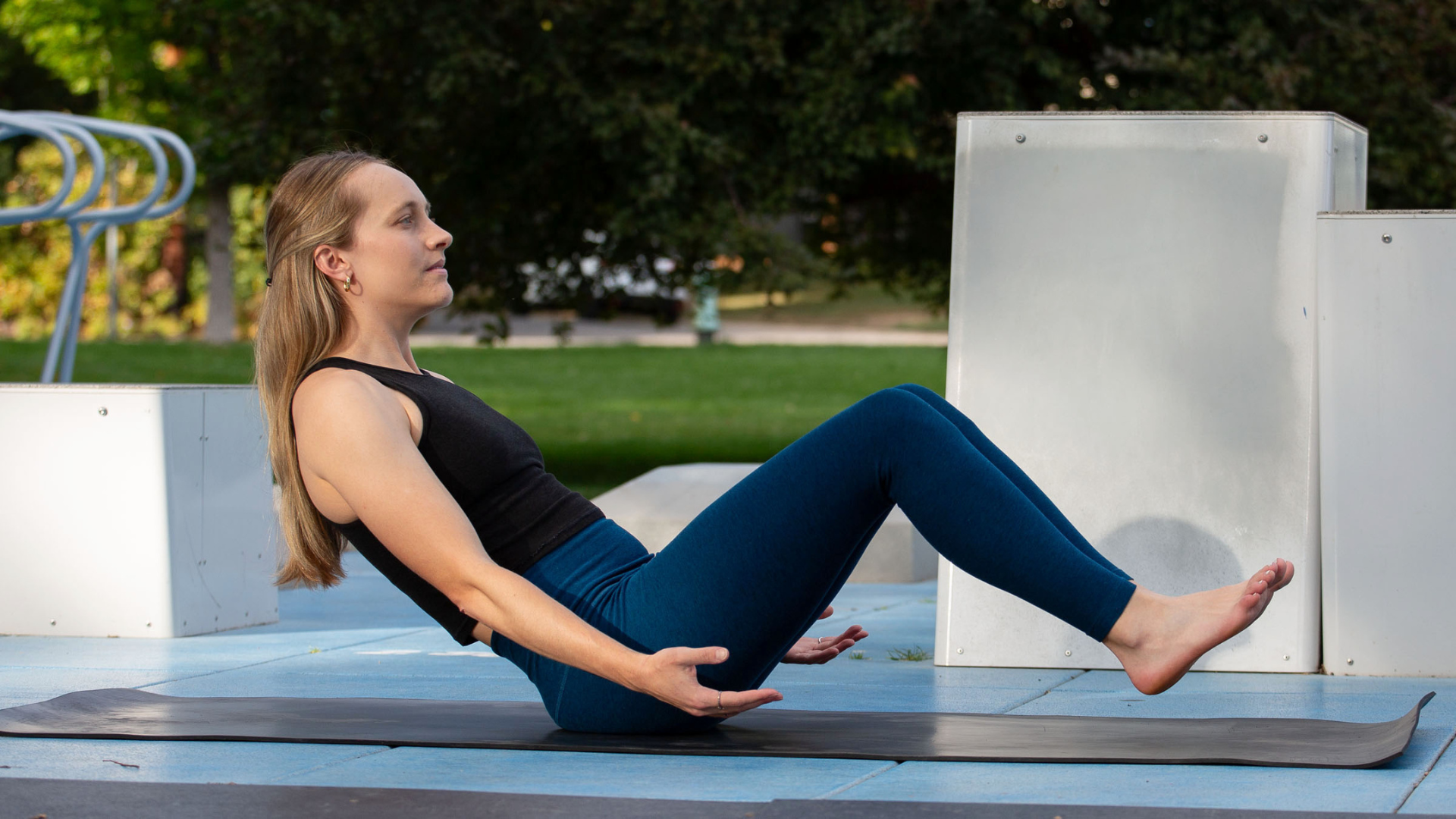
3. Boat pose
One of the main reasons why sit-ups have been replaced by other abdominal exercises in core workouts is because studies have found that sit-ups activate the hip flexor muscles as much, if not more, than the abdominal muscles. But who needs sit-ups when you can turn to yoga for a better (and less curse-inducing!) alternative?
But here’s the good news: Boat Pose is a better alternative to sit-ups because you still get that fantastic hip flexor strengthening without the temptation to fall back on momentum. This increases the load on the hip flexors and core because you have to keep your core engaged And legs up.
1. Get into boat pose by sitting with your knees bent and your feet flat on the mat in front of you. Begin to lean back and lift your feet off the mat. You can straighten your legs or bend your knees and float your feet above the floor or even lightly touch your heels to the mat.
2. Reach your arms down your legs or bring them to the backs of your thighs. Focus on keeping your back straight by pulling your abs into your twist and bringing your lower back forward. If you feel a rounding sensation in your lower back, bend your knees or place your heels on the mat.
3. Stay here for a few breaths. Don’t hold your breath.
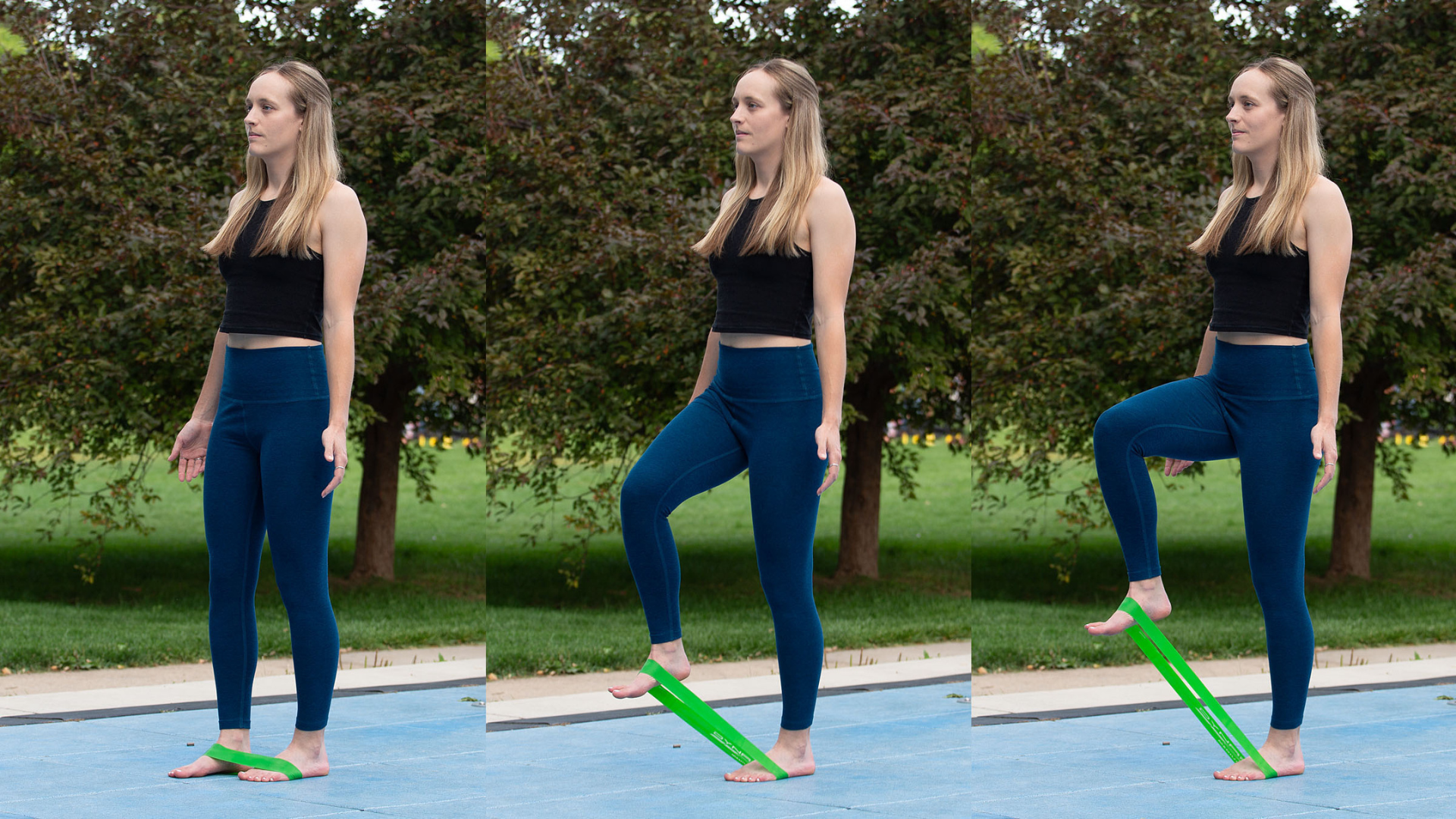
4. Resist hip walks
Most hip flexor strengthening exercises are performed lying down. But in everyday life, our hip flexors work when we stand upright to resist gravity, whether we’re walking, running, climbing stairs, stepping on a curb or walking. This hip-strengthening exercise mimics that position and also works your core muscles.
The movement is similar to many movements on the yoga mat, such as each time you lift a leg to the chest or step forward from downward facing dog. You can use an ankle weight instead of a resistance band.
1. Stand upright with a resistance band wrapped around something low to the ground. Face away from the anchor point with the band looped over the top of your foot. Start with a good amount of tension on the band.
2. Lift the knee on your leg with the band up toward your chest. You can hold onto a wall or the back of a chair for support, or you can pump your arms as if you were running (opposite arm and opposite leg move together).
3. When your knee is as close to your chest as possible, pause and hold this position, tensing your muscles to resist gravity, for 2 to 3 seconds.
4. Take your time as you lower your foot back to the mat. You want to release as slowly as possible to maximize hip flexor involvement.
5. Perform 10 to 15 reps, then switch legs.
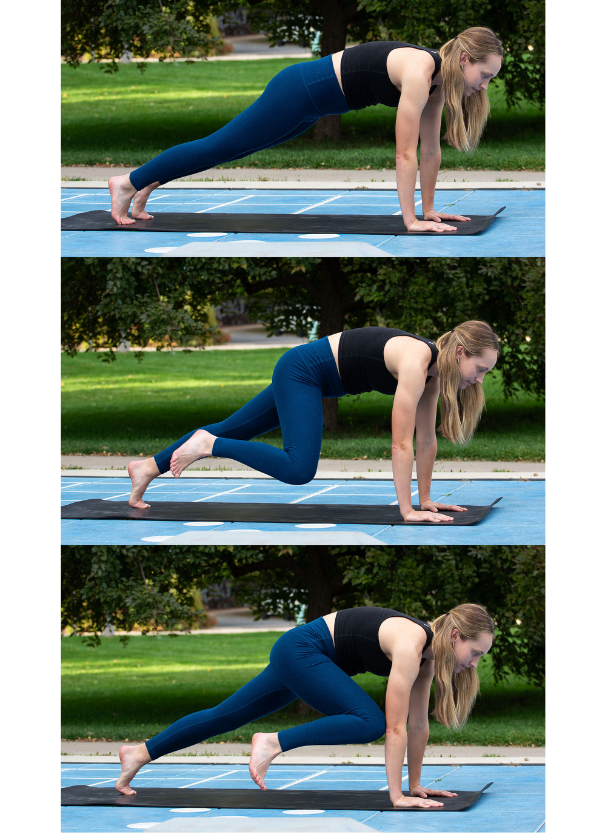
5. Plank pose from knee to elbow
Plank is one of the best yoga poses for strengthening the core, shoulders, and glutes, but you can also continue this exercise to target the hip flexors by pulling your leg forward toward the elbow. It also engages obliques (side abs).
1. Start with a push-up or plank, keeping your core engaged and your hips in line with your body. It is important to maintain this alignment throughout the exercise.
2. Keeping your upper body and hips as still as possible, pull one knee forward and toward the elbow on the same side, while keeping your hands and upper body in a static position and bringing them as close to the elbow as possible. Remember to keep your hips in line with the rest of your body. Hold for 15-30 seconds.
3. Return your foot to Plank. Rest if necessary and then switch sides.
#essential #hip #flexor #exercises #strengthen #overlooked #muscles