

Interior designers understand this instinctively. They know how to stretch vertical space using scale, proportion, continuity and strategic restraint. Small changes in paint, lighting, curtain placement and furniture can completely redesign a room, making an 8-foot ceiling feel high instead of low.
The goal is not to deceive anyone. It’s about removing the design choices that visually ‘block’ a room and replacing them with cues that draw the eye upward.
Here are 14 design choices that will make ceilings instantly feel higher, even if the actual height stays exactly the same.
#1 Hang curtains high and wide, close to the ceiling
Few changes have a greater impact than the installation of curtains. When curtains are hung just above the window frame, they emphasize the wall space above – and that space reads as ‘low ceiling’.
Designers hang curtains as high as possible (often just below the ceiling or cornice) to elongate the wall and make the windows appear larger, visually lifting the entire room.
#2 Use longer curtain panels with real fullness
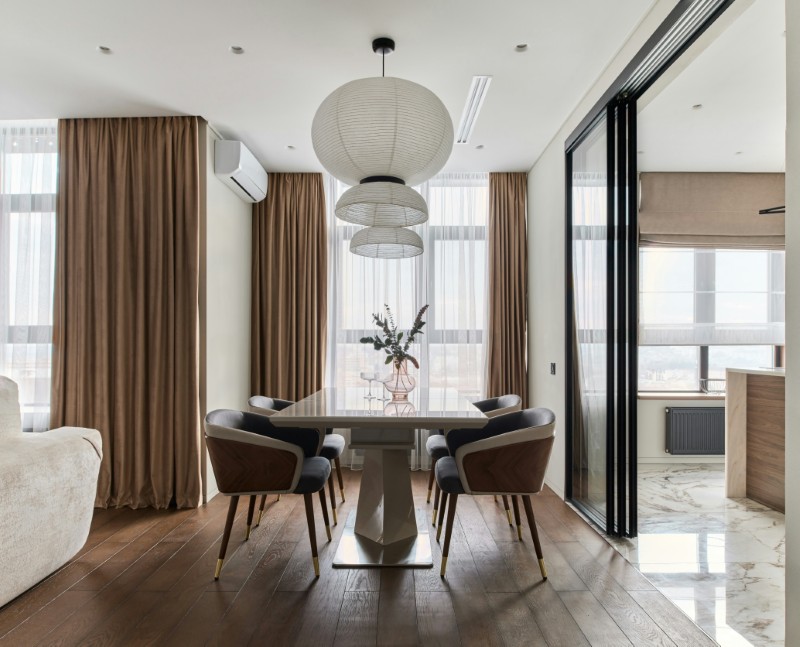
Even with the right height, tight curtains can still read cheaply and visually small. Full, well-scaled panels create vertical flow and soften the edges of the room.
The more continuous the line of fabric from ceiling to floor, the larger the room feels and the more finished it looks.
#3 Paint the walls and trim the same color (or close to it)
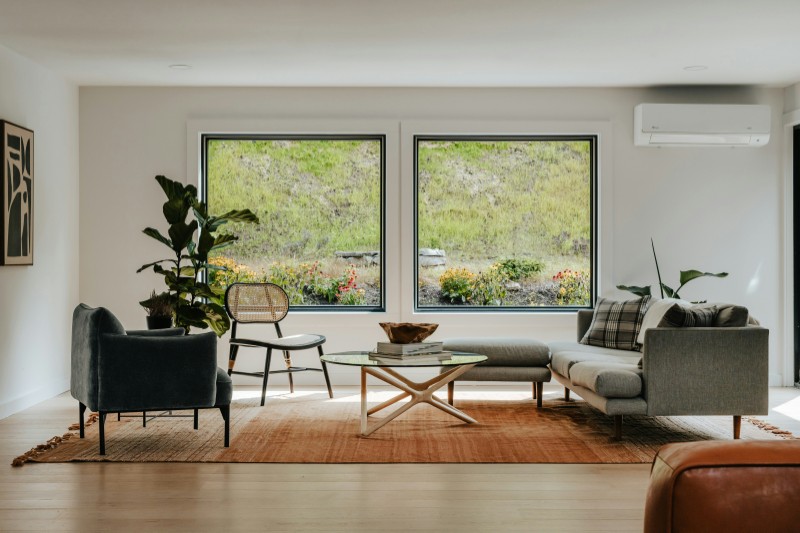
A sharp contrast between the wall color and the finish creates a visual “frame” that can emphasize the height limits of a room. It breaks the vertical line and draws attention to the edges.
Painting trim the same color (or a slightly lighter/darker version of the same shade) provides continuity. The eye moves upwards smoothly and without interruption, making ceilings feel higher and the room feeling calmer.
#4 Skip heavy crown molding (or choose a slimmer profile)
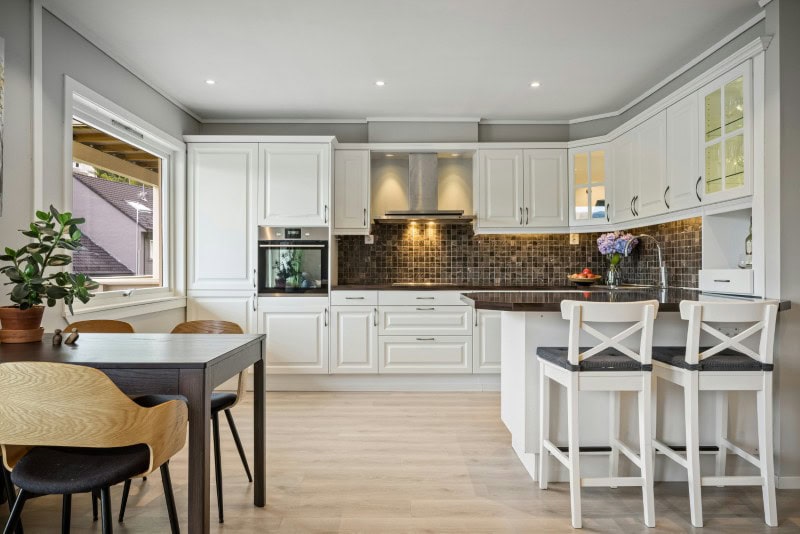
Crown molding can be beautiful, but a heavy crown in a room with a low ceiling can visually compress the height. A hard boundary line is created at the top of the wall.
Designers often go slimmer (or skip the crown altogether) in rooms where the goal is vertical lift. The ceiling feels less ‘finished’, which paradoxically makes it feel larger.
#5 Use vertically oriented wall details (panel moldings, slats, tall bookcases)
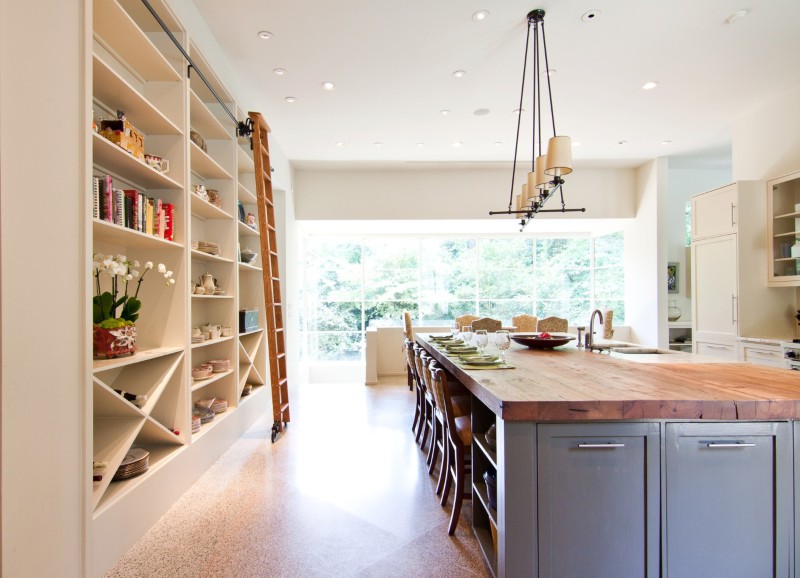
Vertical lines draw the eye upward: it’s one of the oldest tricks in design. Panel moldings, fluted details, slatted wood treatments or simply tall built-ins naturally stretch how the wall is perceived.
Even in small doses, the vertical structure makes a room feel more architectural and lofty, rather than wide and squat.
#6 Choose a taller floor lamp instead of several short table lamps
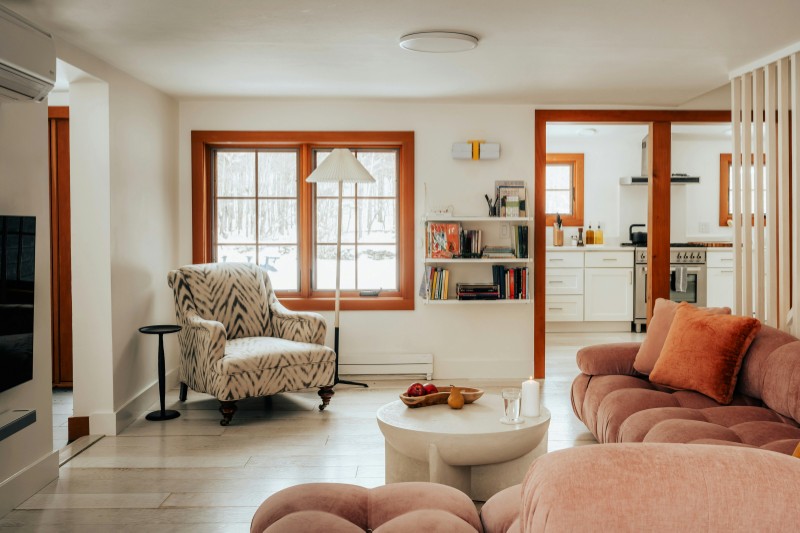
Many low, short light sources create a visual horizon line that keeps the eye focused on the center of the room. Taller lights create vertical punctuation.
A single tall floor lamp can do more for the perceived ceiling height than several small lamps scattered throughout.
#7 Replace recessed lights with fixtures that draw the eye upward
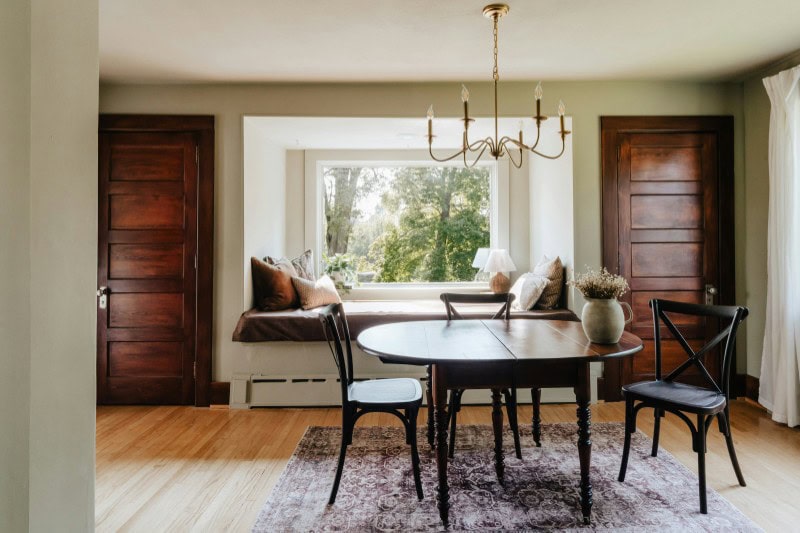
Construction grade flush mounts tend to flatten a ceiling. They visually reinforce ‘this is where the room ends’.
A pendant, semi-recessed installation with vertical depth or a chandelier-like silhouette adds presence to the ceiling and makes the height feel more intentional.
#8 Keep ceiling paint bright and clean (but not stark)
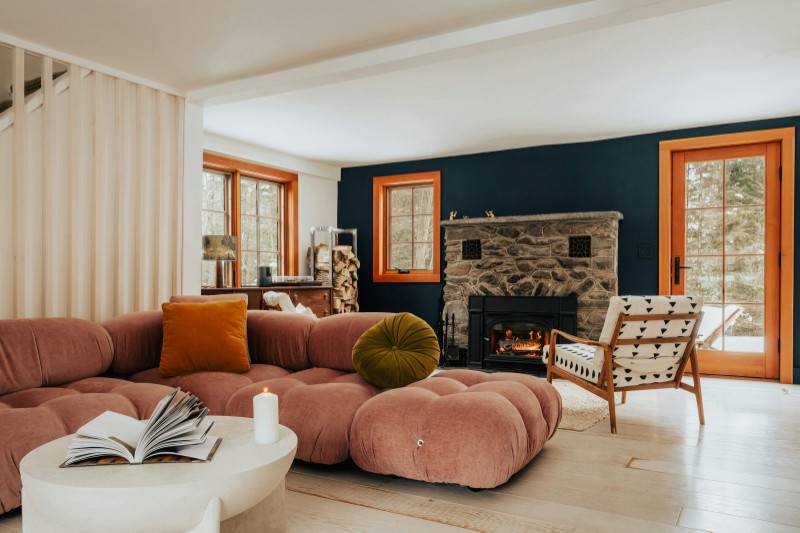
A ceiling that is too dark will visually lower itself. A ceiling that is too stark white can sometimes feel hard and emphasize boundaries.
Designers often choose a ceiling color that is clean and light, but not icy – something that keeps the ceiling airy, soft and visually distant.
#9 Use oversized artwork (especially tall pieces)
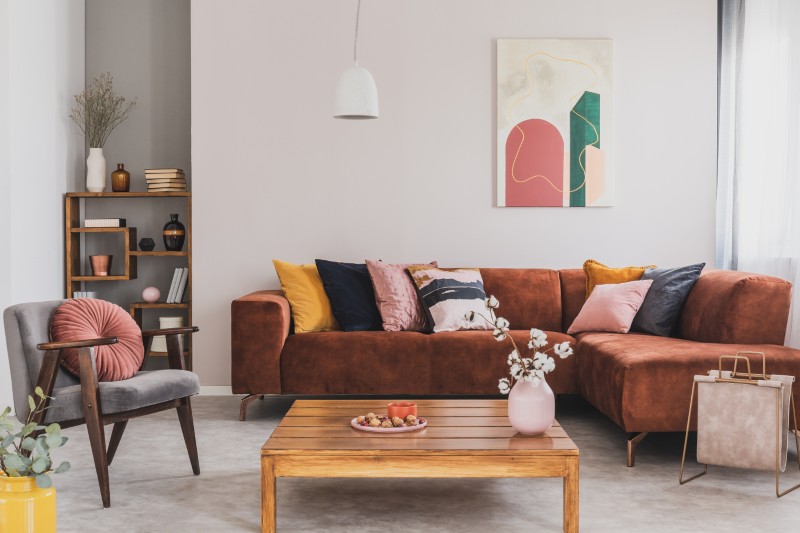
Small art in a room with low ceilings creates a ‘shrunk’ effect; it makes the walls feel shorter in comparison.
Taller artwork, especially vertically oriented pieces, makes the wall feel larger and the ceiling appear further away. Scale is everything here.
#10 Avoid a horizontal “line” across the room (chair rails, hard paint breaks)
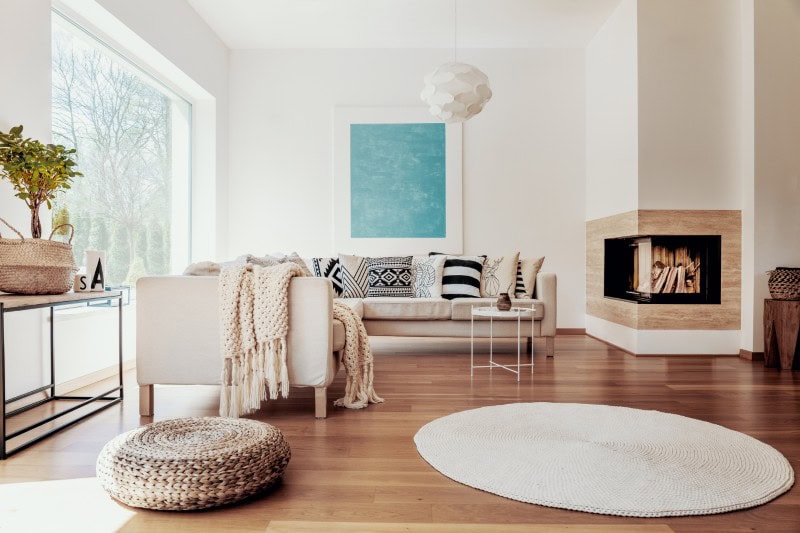
Each line that wraps around a room halfway up the wall creates a visual closure. Chair rails and two-tone paint treatments may be charming, but they lower the perceived height.
Designers often avoid strong horizontal breaks in low-ceiling rooms, or keep them subtle enough so that they don’t dominate the wall.
#11 Use lower, longer furniture instead of tall, bulky pieces
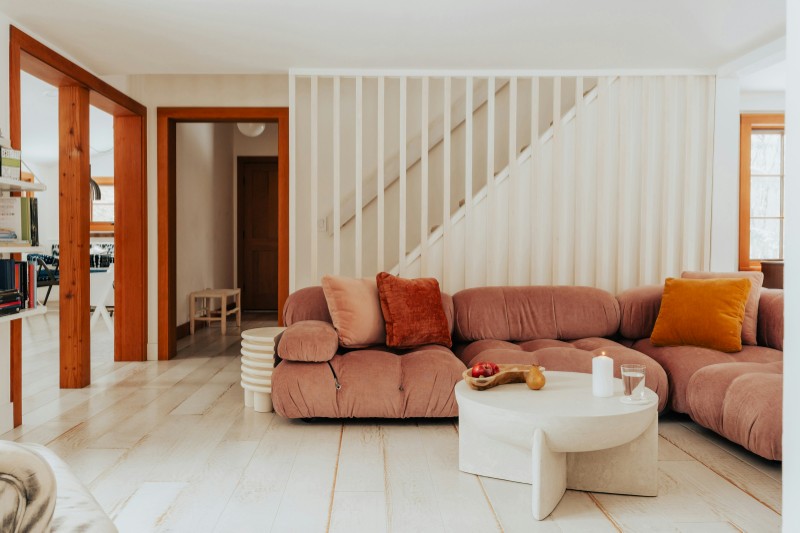
This sounds counterintuitive, but it works: Furniture that sits lower makes the height of the room feel taller in comparison.
A low-profile sofa, streamlined chairs and furniture that doesn’t visually crowd the top half of the room create breathing space and more visible wall height.
#12 Keep the upper walls and ceilings visually calm
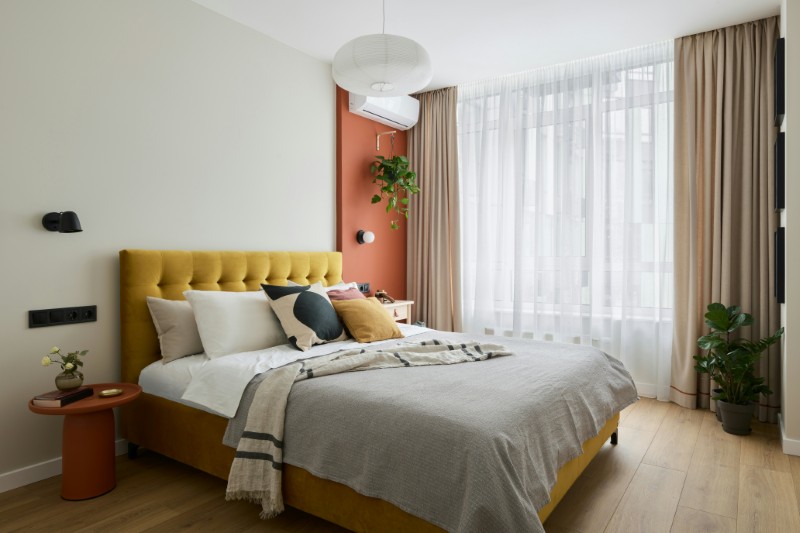
Ceiling clutter draws attention to height limits. Busy top shelves, high-mounted sets or stacked visual sounds make ceilings seem closer.
Luxury rooms often feel larger because the upper part is quiet; it creates a feeling of uninterrupted vertical space.
#13 Use mirrors to extend vertical lines and bounce light upward
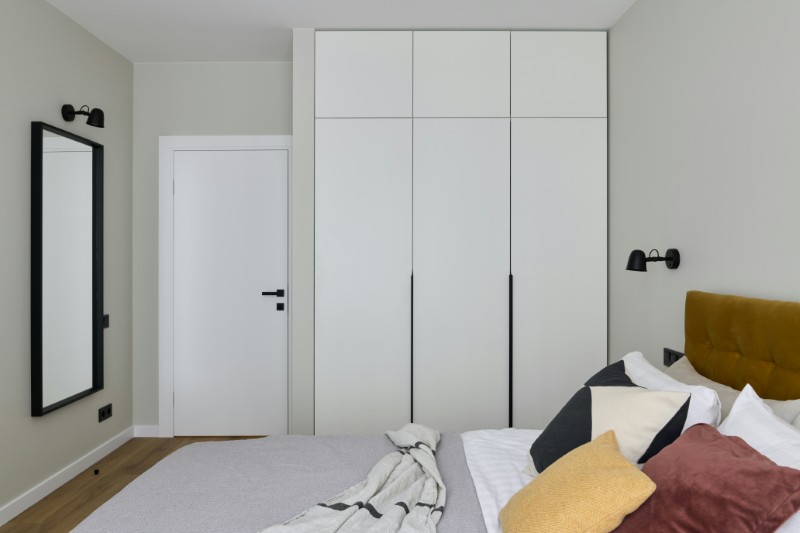
Strategically placed mirrors not only make rooms feel larger, but also lift them up. A tall mirror leaned against a wall or mounted vertically adds both height and brightness.
Mirrors also reduce shadowy corners, making ceilings feel lighter and higher.
#14 Create a consistent floor throughout to reduce visual interruptions
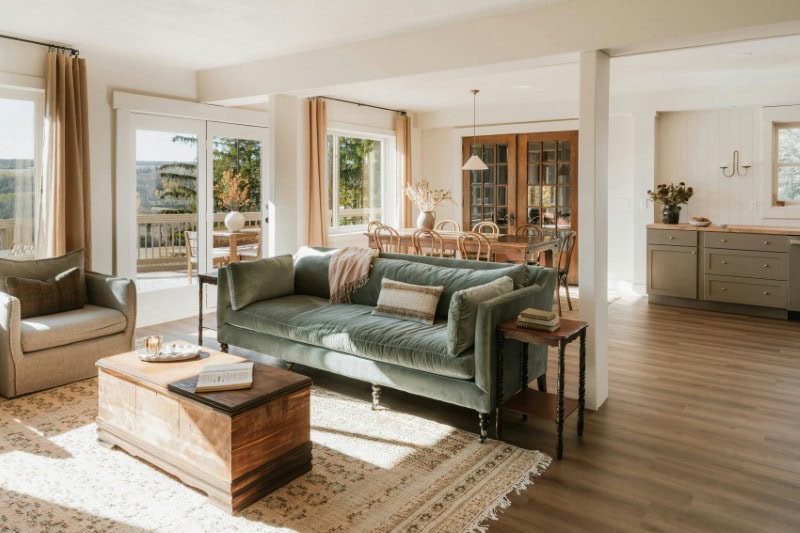
This is more subtle, but more powerful. When floors change from room to room – or stop and start at thresholds – the home feels visually rushed and lower.
A consistent floor creates flow and continuity, making rooms feel more spacious in all directions, including vertically.
More stories
19 Five-Figure Home Upgrades That Actually Cost Less Than $500
18 details Interior designers always notice it right away
Home trends that everyone loved in the 2000s that have aged surprisingly well
#design #choices #instantly #ceilings #feel #higher