

There’s still a fairly common belief among many gym-goers that core strength equals sit-ups and crunches. Whether you learned that in science class or watched countless influencers teach “correct” alignment in these classic exercises, the myth continues. But sit-ups and crunches aren’t the most effective or even safest core-strengthening exercises for the abs and other supporting muscles.
The best core workouts are not limited to a single approach, but rather include both static poses and dynamic movements to build strength and stability in all the muscles that form and support your core. So it’s essential to have a handful of core-strengthening exercises on hand.
Why sit-ups aren’t great core strengthening exercises
During a sit-up, you lie on your back and raise your entire upper body to a vertical position, while keeping your back straight, your knees bent, and your feet flat on the floor.
There are several reasons for sit-ups are not effective abdominal exercisesS. Perhaps the most defining is that they are difficult to perform without relying on momentum to help you on the way up and gravity to help you on the way down. While this makes the exercise easier, it also cheats you out of muscle strengthening if you choose this instead of other core-strengthening exercises.
Even if you move slowly and tense your muscles instead of using momentum, studies have found that sit-ups activate the hip flexor muscles more than the abdominal muscles to help lift and lower your upper body.
Need even more convincing? Even the US military stopped this exercise in 2020 with an update to the Army Combat Fitness Test.
Are crunches better than sit-ups?
Unlike sit-ups, which lift the entire upper body off the mat, crunches partially curl the spine upward to lift only the shoulder blades. The partial lift largely eliminates the involvement of the hip flexorswhich isolates the work in the core muscles a little more. But crunches are only slightly more effective focused on the abdominal muscles then sit ups.
Crunches also involve flexion of the spine, or slight rounding of the back, which is contraindicated for anyone with several conditions, including osteoporosis. diastasis rectiand pregnancy. Crunches can also put pressure on the neck and spine.
12 Best Core Strengthening Exercises Instead of Sit-ups
The following core-strengthening alternatives to sit-ups are more effective than classic sit-ups and are things you can easily incorporate into any yoga practice or gym routine. There’s no reward for doing as many reps as you can, so do them all slowly. The goal-driven movement with awareness that allows you to optimally contract your abdominal muscles.
1. Shelf
This intense but incredibly efficient pose targets your entire core and supporting muscles. Bored with plain old plank? You’ll experience comprehensive core strengthening with each variation of the pose, including forearm plank, side plank, and movements such as forward reach, leg lifts, and knee to nose. Don’t forget to breathe.
How: Get on your hands and knees with your shoulders over your wrists and hips over your knees. Tuck your toes and get into the top of a push-up position. Spread your fingers wide, look down and reach through the top of your head while simultaneously pushing through your heels.
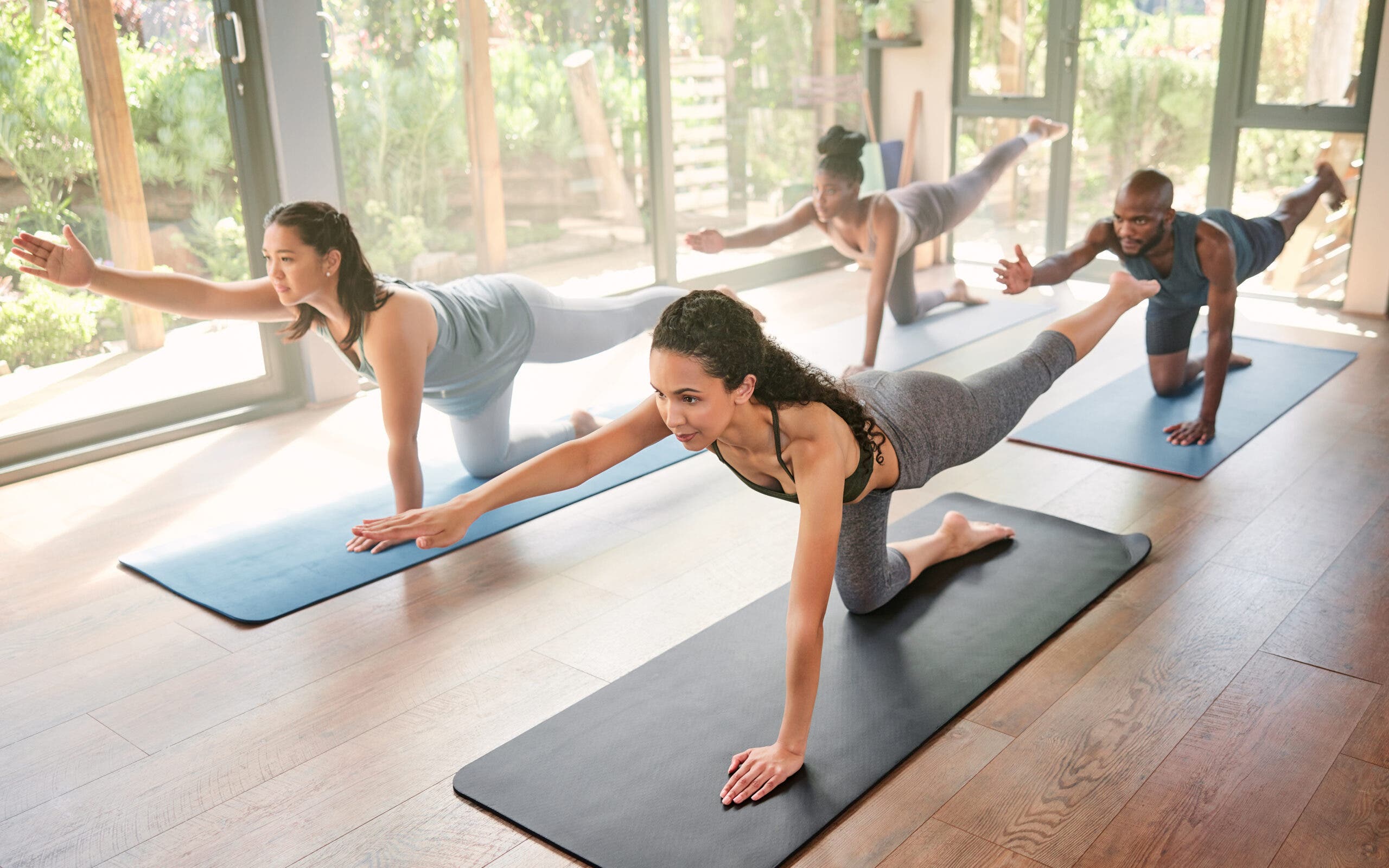
2. Bird dog
This kneeling balancing position targets the spine stabilizing muscles and glutes. It’s actually more challenging than it seems. If it feels simple, try Plank’s.
How: Start on your hands and knees and extend one arm forward so that it is parallel to the mat. Keep your arm raised as you lift your other leg parallel to the mat. Find your balance. Slowly lower your hand and knee and move past your starting position to touch your elbow and knee together in a crunch under your chest. Then lower your hand and knee to the mat. Repeat on the other side. Switch sides for about 20 reps, slowly and with control.

3. Dead insect
This is basically Bird Dog on your back. Because the balancing is left out, it may feel a little less intense, although the challenge is to take it slowly to ensure that your muscles, not momentum, are creating the movement. This core exercise strengthens your lower abdominal and pelvic floor muscles.
How: Start by lying on the mat and pulling your knees toward your chest. Bend your knees 90 degrees with your shins parallel to the mat and your arms reaching toward the ceiling. Inhale, tighten your abs and slowly lower one foot toward the mat until your toe is almost tapping down. At the same time, extend your opposite arm straight behind you toward the mat, but without touching it. Keep the opposite leg and arm stable in your starting position.
Return your leg and arm to the starting position and repeat with the other leg and arm. Switch sides with each repetition, slowly and with control. Try 15 reps per side.
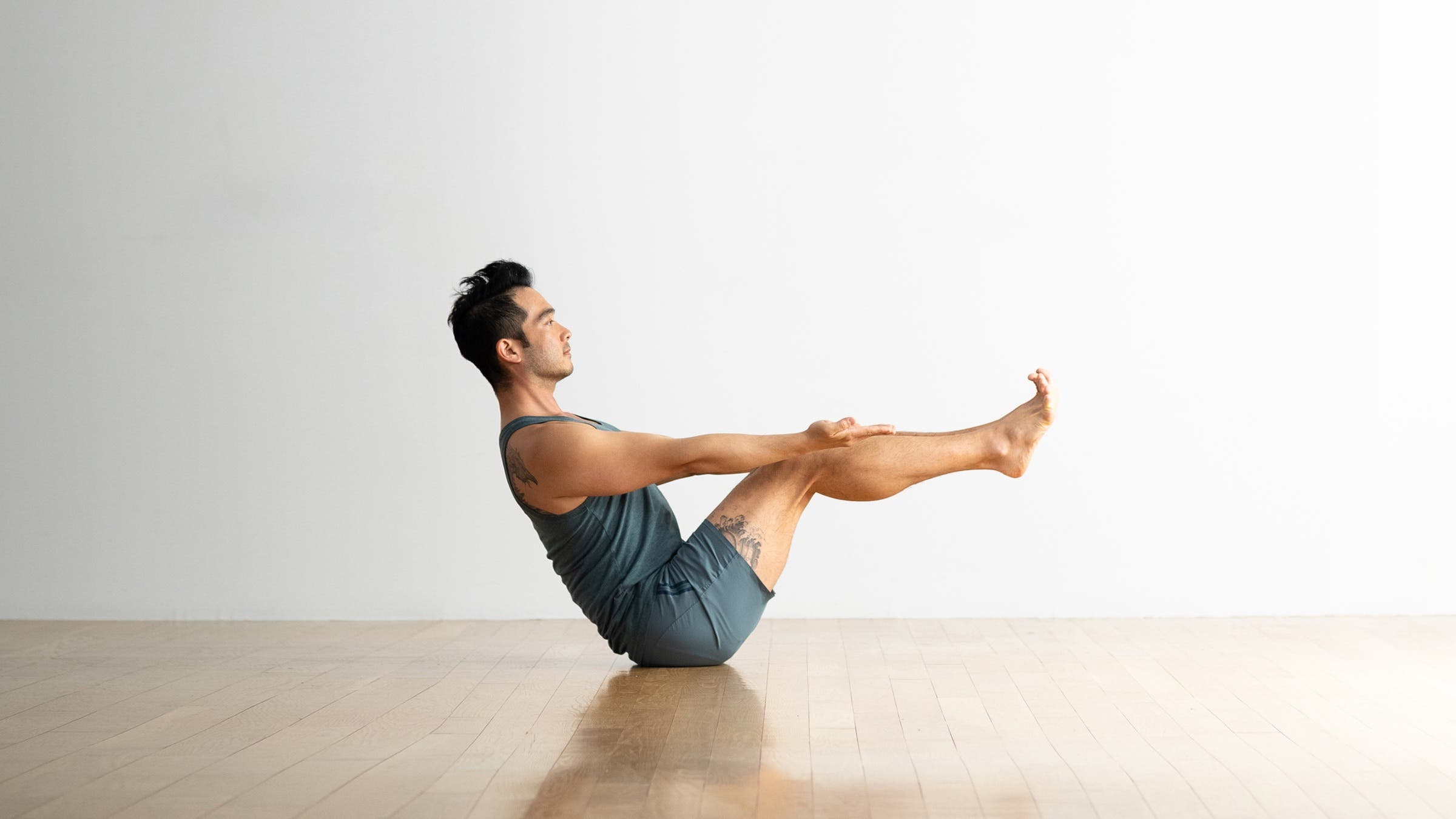
4. Boat pose or V-ups
Love it or loathe it, Boat Pose is a better alternative to sit-ups than crunches because you get both core strengthening and hip flexor strengthening from having to hold your core And legs up. Choose the classic yoga pose (with straight legs or bent knees) or make it dynamic by adding the V Ups movement option.
How: Create the classic V-shape of Boat Pose with your arms at your sides. Stay here for a few breaths or amp up the challenge by slowly lowering your entire body to the mat and then assuming Boat Pose in what is known as V Ups. Keep your back straight.

5. Hollow holds or low boat position
This isometric exercise is essentially a version of Low Boat Pose.
How: Start by lying on the mat and pulling your knees toward your chest. Straighten your legs and float them low above the mat as you reach your arms past your head in a subtle V-shape. Keep your lower back in constant contact with the mat.

6. Russian twists
Think of this as Boat Pose with a twist. Literal.
How: Come into Low Boat Pose with your back and legs about 45 degrees off the mat. Cross your ankles and twist from side to side. Keep your back straight and move only your upper body as you twist. As with classic Boat Pose, you can choose to rest your heels on the mat. Those who practice Russian Twists at the gym tend to hold a weight and tap it on the mat on either side, although the exercise still provides benefits if you use only your body weight.

7. Reverse crunches
These are ideal to include at the end of the standing portion of the class, just before the cool-down.
How: Come onto your back, bend your knees to 90 degrees and stack your knees over your hips so that your shins are parallel to the mat. Slowly pull your knees toward the wall behind you as you lift your lower back off the mat in a slow, controlled Reverse Crunch. Take your time as you go down. Repeat.
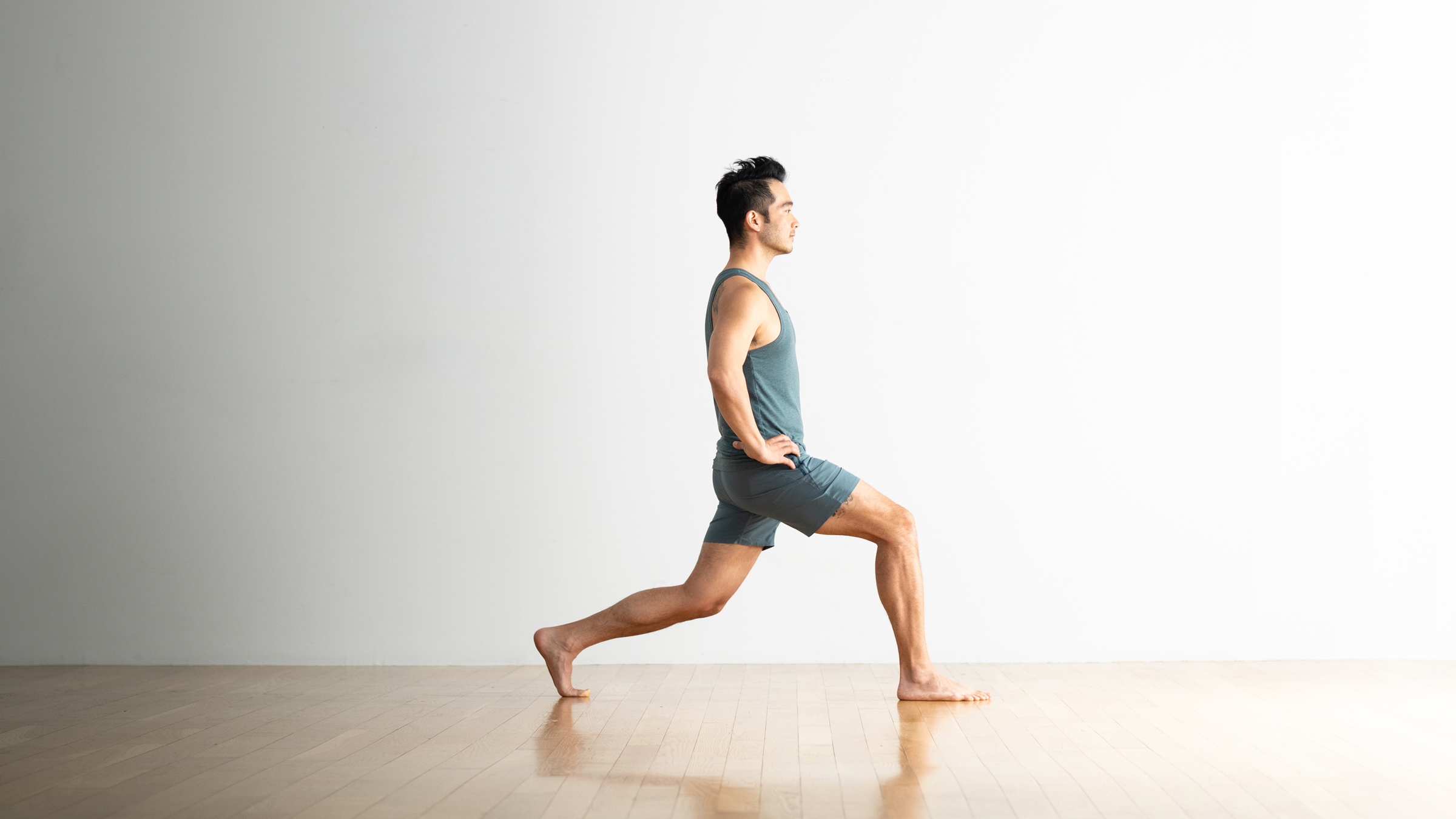
8. Falling out
Stepping forward into a High Lunge works your entire core and challenges your body differently than movements that ask both sides of your body to work in symmetry. You practice this move several times in a typical yoga class, although you can repeat the move for a workout on its own. The same goes for stepping forward into a Warrior pose.
How: Stand at the back of the mat or come into Downward Facing Dog with your feet hip-distance apart. Step your right foot forward, lift your chest and reach your arms past your ears. Let your back heel come off the mat. Pause here and then step back to standing or Down Dog. Repeat this several times and then switch to step forward with your left foot.
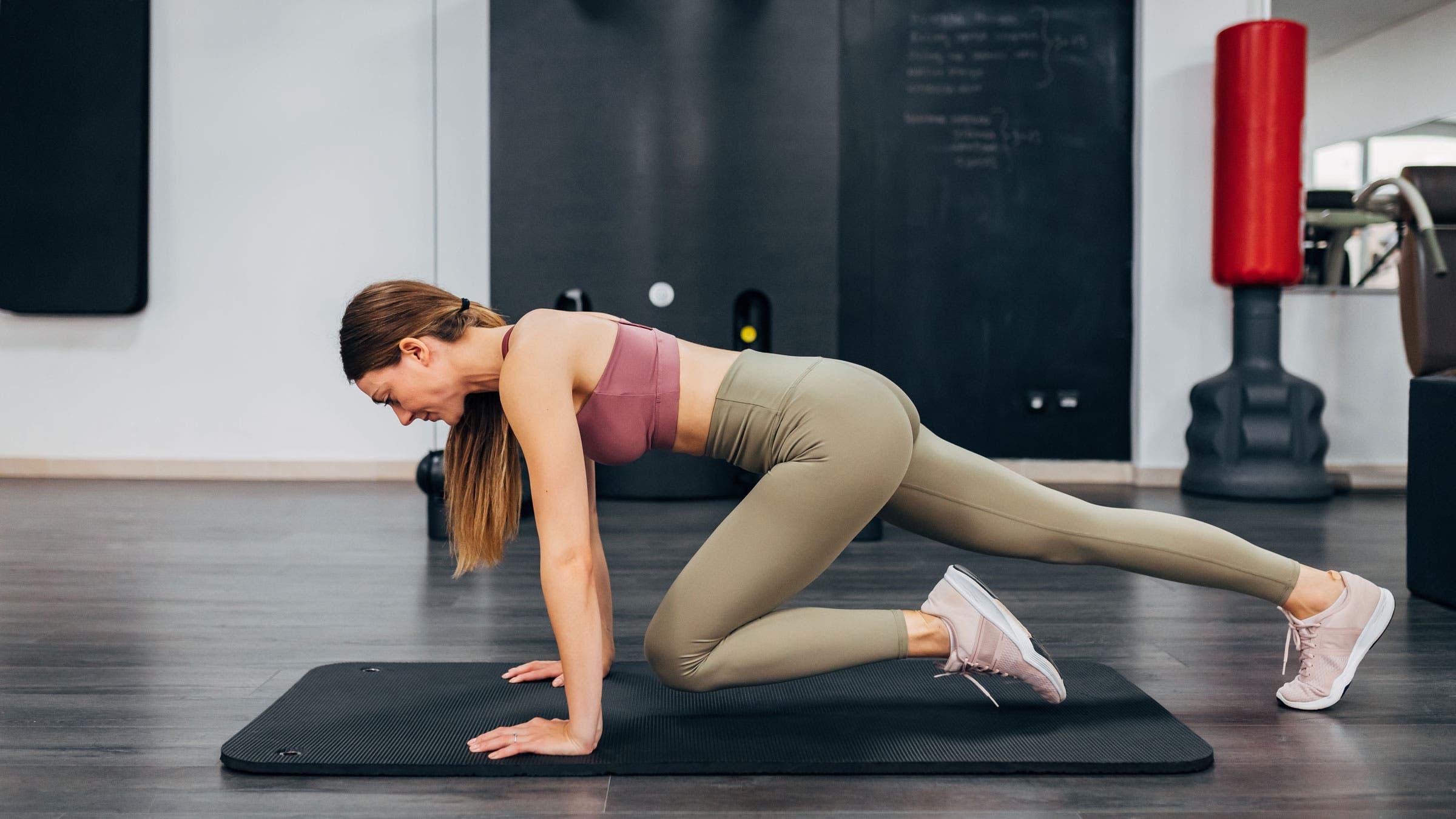
9. Mountain climbers
The exercise you love to hate. (If you know, you know.) Think Plank with repetitive and accelerated knee-to-nose movements.
How: Start in Plank. Press your hands into the mat and keep your upper body still as you bring your right knee to your right elbow and then step back and switch sides. If your upper back starts to sag or your elbows spread out, adjust your posture so that it is straight and stronger, or take it as a sign that you have done enough and need to rest.
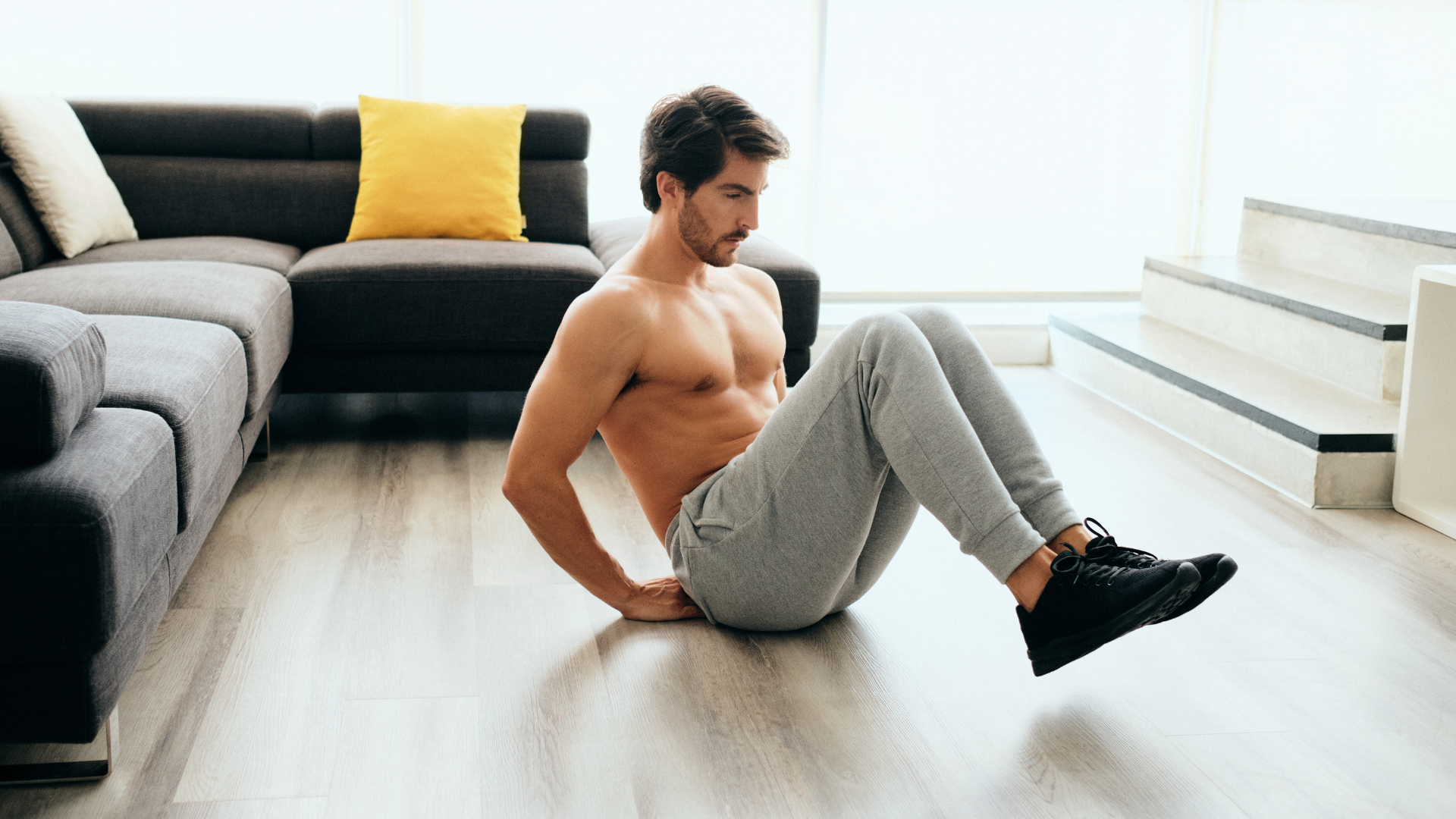
10. Seated knee tucks
If Crunches and Boat Pose had a love child, it would be this exercise.
How: Sit on your mat with your hands behind you for support, bend your knees and pull them toward your chest. Lean your upper body slightly back, keeping your back straight, as you straighten your legs and float them above the mat in a low boat position. Then bend your knees and pull them toward your chest. It’s easy to let momentum do the work here. Resist.
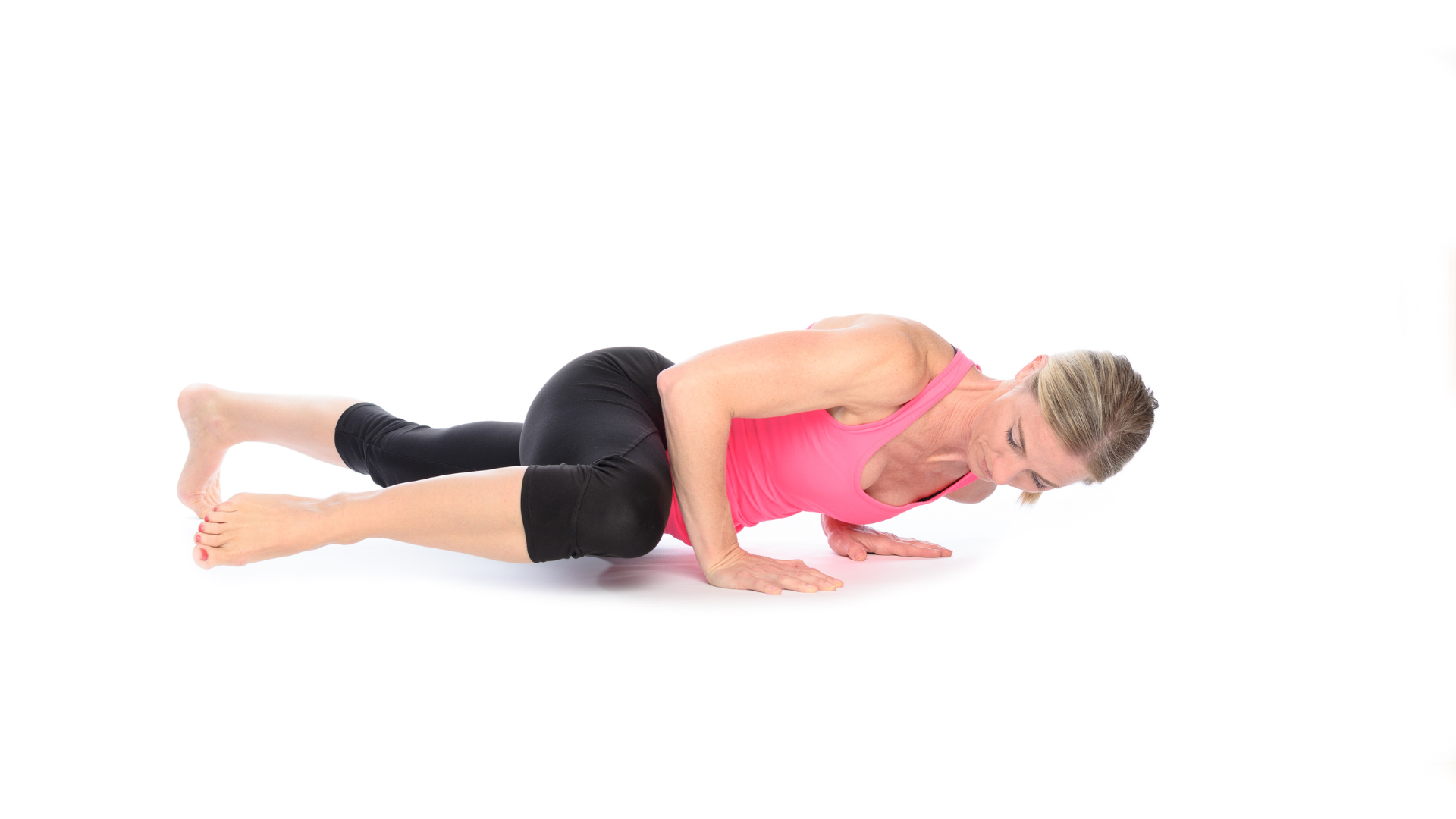
11. Spider-Man push-ups
Prepare for the challenging arm balancing pose known as Koundinyasana! It focuses on the core stability you need in everyday life, as well as arm balance. You’re essentially simulating the exact same shape, minus the lift-off.
How: Start in Plank. Lower into Chaturanga, bend your right knee and pull it forward toward your right elbow. Your whole body should be in alignment. Return to Plank and repeat on the other side. Keep switching sides.
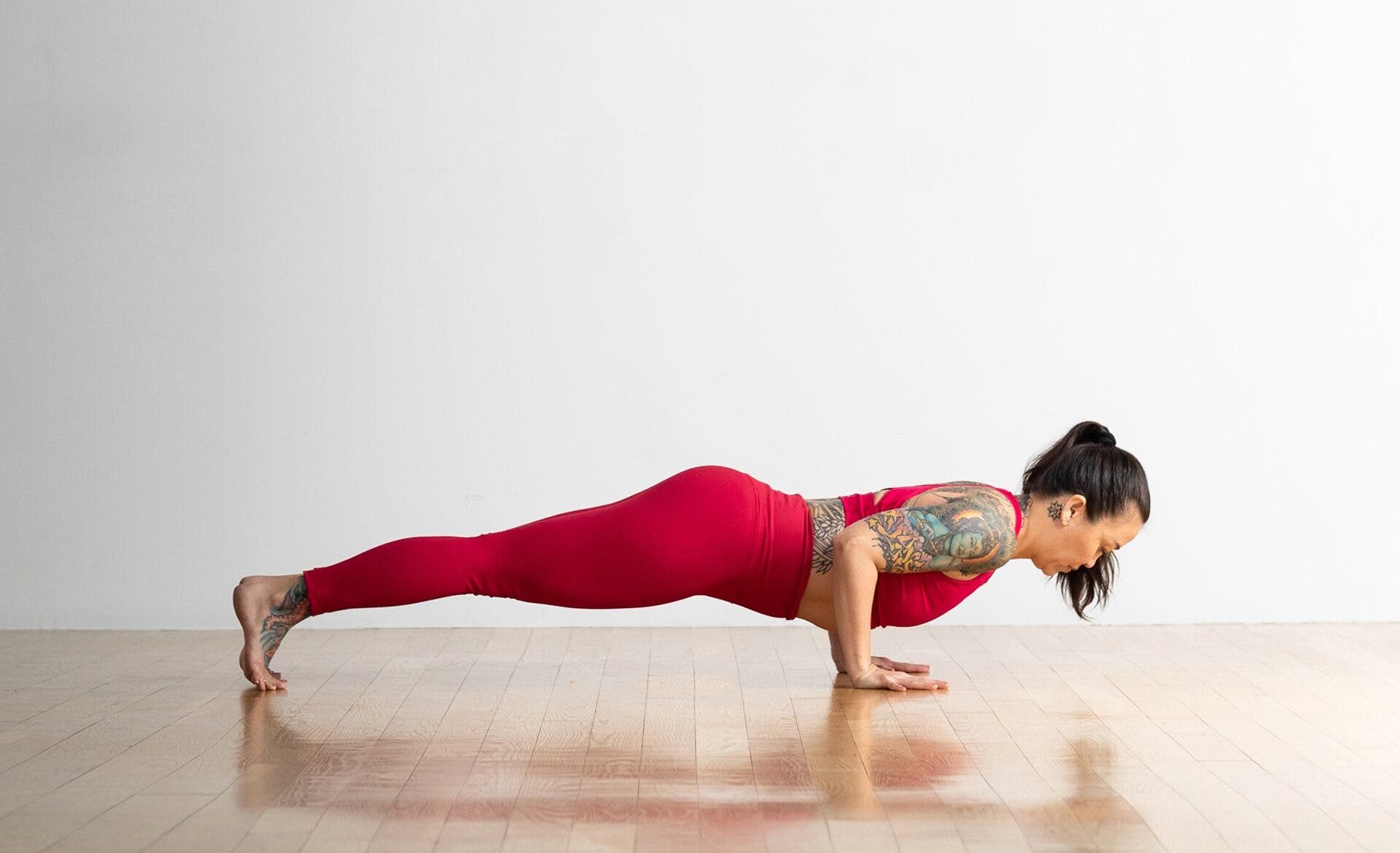
12. Burpees
Think of this as a more dynamic transition from Plank to Chaturanga. (If you practice jumping back and forward, you will appreciate this exercise.)
How: Start standing with your feet hip-distance apart. Slowly lower yourself to Chaturanga and they push you back up to Plank. Bend your knees and jump your feet forward with your hands still on the mat. Then jump up with your arms above your head. Return your hands to the mat, step or jump back to Plank and repeat. This full-body workout is typically practiced as quickly as possible, although that can result in sloppy alignment. Instead, focus on taking the time you need to find the integrity of each pose. The core reinforcement will be the same.
#essential #corestrengthening #exercises #crunches #situps #required